9 - LLM Adoption Burnout and the Hidden Tax
I've been a software engineer and architect for decades. I've watched platform shifts wash ashore—the web, mobile, cloud, containers. Each one altered our work landscape and demanded we “learn this or fall behind.”
This one feels different.
We software engineering types have noticed fewer jokes and smiles in the hallways lately, regardless of where we work. The subtle check-ins—“are you doing ok?” disguised as a laugh or quick gripe—have gone quiet. Everyone is focused on coming to grips with this AI wave, and the wave demands it.
The task-specific productivity gains are real and often a blast to use: code generation, writing, debugging, analyzing codebases, generating specifications. Genuine wins in lanes that started narrow and are widening fast. We’re putting in the hours—off the clock, at home, late at night—evaluating tools, running experiments, separating what actually works from the hype. Output goes up. So do the uncounted hours. Employers see engagement. The human cost stays invisible.
The Identity Crisis
We do what we do because we’re good at it. We’ve built careers on symbolic manipulation, systems thinking, and pattern recognition across complex domains—the kind of cognitive work few people can do. We’ve been fortunate beneficiaries of timing, genetics, and accumulated experience. If you don’t think an engineer is as proud of his mind as a bodybuilder is of his muscles, you haven’t spent much time with engineers. That cognitive edge is key to our identity, stability, and market value.
For the first time, machines can do much of what we do—sometimes better, almost always faster, certainly cheaper.
Previous automation waves hit physical labor, then routine cognitive work. Engineers watched from upstream and felt safe, but not anymore. The people who built their careers providing automation are now in its path. That’s a plot twist we didn’t see coming. Admitting “I’m worried my skills are becoming less valuable” still sounds like weakness or failure to adapt. So the weight goes unspoken.
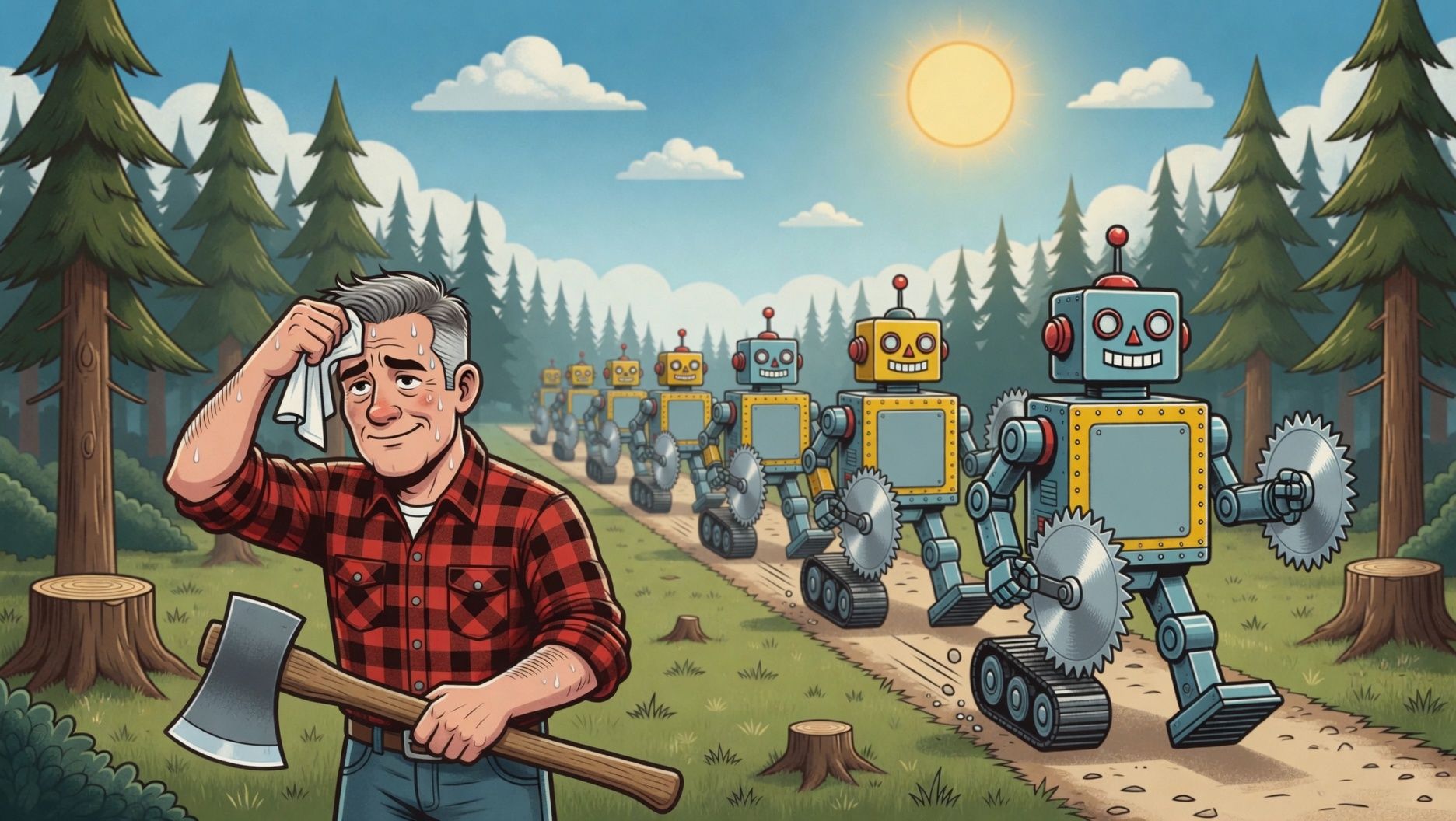
Digital Paul Bunyans
We labor as digital Paul Bunyans—clearing the way for the machines that are replacing us.
There’s a recursive trap that’s hard to see from inside it. You use the LLM tools to stay productive. The tools improve. Your unique value-add narrows. You use the tools more. Repeat.
I’ve spent real effort automating tedious design and code reviews, building creative countermeasures for the many ways LLMs wander off complex tasks. Yet I’m also writing my replacement for areas where I once added the most value.
We’re increasingly specialists in the shrinking zones where AI is weakest: judgment calls, stakeholder translation, and deep accumulated context about why the system is shaped the way it is. The boundary keeps moving in one direction. Everyone sees it. Nobody knows where it stops.
The slowdown in junior engineer hiring is the clearest signal. Employers are reluctant to hire for what LLMs can mostly already do—and what LLMs can do grows relentlessly.
Executives need AI tool spend ROI for their own survival. The surviving engineers are on the hook to prove it. There are no villains here—just rational responses to local incentives.
The point of the spear is still the engineer at 11pm, muttering to an LLM, wondering about the juniors who can’t find jobs, what higher ground looks like, and whether we’ll reach it before the next wave crashes.
Winning at Any Cost
We want to win. Our identity needs us to win.
And this work isn’t drudgery. LLMs are genuinely magical. They’re always ready, always willing, able to follow a thread at any hour without needing to leave for family. It’s exciting.
But excitement sits closer to anxiety than to rest for our bodies. The nervous system doesn’t distinguish between thrilling and stressful—it just runs the tab. The body keeps the receipts even when the brain is enjoying the ride.
None of this is to say the emperor has no clothes. The tools are real. The capabilities are growing. The excitement is justified. We’re just not sure yet how much the clothes cover. We’re all heads-down, squinting to see the shape of a future that stubbornly refuses to come into focus.
We’re a year into this. Many of us aren’t at a sustainable pace, as our smartwatches remind us daily. We hope our engineering pattern recognition, systems thinking, and steady persistence will allow us to surf this wave instead of wiping out.
Paul Bunyans clutching axes, or creative explorers entering a new golden age?
Most days, it feels like both.